Showing posts with label read. Show all posts

Wednesday, October 5, 2011

Book Reviews: Brother Lawrence and A.W. Tozer

Back in July, I betook myself to the woods in pursuit of a Walden Weekend, of sorts.

It was an awesome time alone with God, creepy vault toilet notwithstanding, and during that time I read two books:

The Practice of the Presence of God by Brother Lawrence
and
The Pursuit of God by A.W. Tozer

These were excellent books and they contributed a huge part to the success of that weekend. But I realize now that I never did anything more than mention that I read them. Personally, I hate to read a great book and "lose it" by not having some kind of formal response or review so I am in the process of putting together a review of each of these.

Until then, here are a few some thoughts:

Brother Lawrence, a 17th century monk, receives quite a bit of hype in my circles. I've even heard it said that a Christian needs nothing more than the bible and Brother Lawrence. With that in mind, let me suggest that he was certainly NOT a wise philosopher in the guise of a humble man. He was truly a humble man touched by wisdom.

This may seem like a subtle or even undefinable distinction but, let me assure, there can be no mistake about what Brother Lawrence was. He was not great by any standard we set: humble in life and skill, simple in thought and word. He was meek and, it seems to me, a shy man. A nice guy, sure, but not the monster of a spiritual warrior that I expected.

Now that you hate me, let me redeem myself. I believe this man was a hero of epic proportions by God's standard. His unwavering faith and pure devotion to God are far beyond admirable. They seem to be very close to the perfect example of Christlike love and submission: life lived fully in the presence of God, there can be no great aspiration. Brother Lawrence did not disappoint my expectations, in his unassuming way, he made them into a bit of a joke.

I came expecting ambrosia and got manna instead.

I won't sat much about The Pursuit of God other than it was named perfectly. It is a well written, easy to understand, short, and engaging book that presents the reader with the opportunity to live a life not only in God's presence, as with the Practice of the Presence of God, but in active constant pursuit of Him. This is a big idea with proportionate implications, don't let my lack of description belittle it.

But for now, know that the two taken collectively will shake you down, inspire you, and equip you to start that relationship with God that you really hope exists.

Book Review: Open Leadership


Open Leadership: How Social Technology Can Transform the Way You Lead (J-B Warren Bennis Series)Open Leadership: How Social Technology Can Transform the Way You Lead by Charlene Li
My rating: 3 of 5 stars

I recently finished reading Open Leadership by Charlene Li. I "stumbled" upon this book on a reading list for the University of Washington's Masters of Communication in Digital Technology program. I didn't know anything about the book, but the subtitle: "How Social Technology can Transform the Way You Lead," intrigued me. I've recently become a junkie for all things social.

Shortly after I started reading Open Leadership, I discovered that Charlene Li is an acknowledged industry leader in social technology, among other things, and is also the founder of the Altimeter Group, an advisory firm that specializes in helping companies utilize so-called "disruptive technologies."

Don't worry, I wasn't sure exactly what a disruptive technology was myself, so I looked it up. I am nothing if not a Google aficionado. Disruptive technologies are, roughly, technologies or innovations that "disrupt" existing practices by creating a new way of doing things or even a new "thing" to do. That is, they create a new market or value network. Social technology can be considered a disruptive technology in that it changes the way that businesses and individuals communicated (to a degree) and creates an entirely new activity altogether, you really can't say that "Facebooking" is comparable to talking on the phone or reading an email; it's something unique and new.

Whenever this kind of innovation comes a long, it can be difficult to embrace this new technology and to make the transition from the "old way" of doing things to the "new way." The Altimeter Group attempts to lubricate that transition.

Why did I just spend three paragraphs talking about disruptive technology? Really? Do I ever need an excuse to talk about something for three paragraphs?

But, in all seriousness, this difficulty was the catalyst for Open Leadership.

The term "open-leadership" itself refers to the style of leadership that values transparency, authenticity, and trust. If you are hearing a lot of "buzzing" from those words, don't adjust your audio; it just means that this is not a new idea. Social technology (via the popularity and ease of information sharing and the incredible connected-ness of the world) has played an important role in creating the market or desire for these "open" attributes.

As I said, social technology changed the business marketing and communication game in many ways. It changed the nature of the business-client relationship and that transition has been rough for many businesses. Open Leadership is a manual on helping your company or agency accept the inevitability of this changed game, take control of your destiny in it, and embrace the possibilities that it offers.

And I am not joking when I say it is a manual. The book is full of lists, tests, diagrams, worksheets, and auditing methods for you to (relatively) scientifically examine the "openness" of your organization. It also outlines the essential elements of an open leadership plan and walks you through the steps to creating and sustaining that plan. It is intensely practical edging on overwhelming at times.

With that in mind, this is not a book that I plan on shelving or giving away. It will stay close by (kind of inevitable as it's on my Kindle and my phone) for continued reference, partially because there are some really great tools inside and partially (mostly) because there are a lot of things that I didn't retain the first time through. Seriously, there are a lot of lists in this book...

View all my reviews

Saturday, October 1, 2011

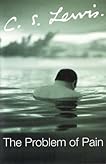
Book Review: The Problem of Pain

I finished The Problem of Pain by C.S. Lewis back in May, and this review has been one of those "meaning to" things. C'est la vie! C'est comme ça que je suis!

C.S. Lewis rocks my brain. He thinks and writes in such a linear and logical pattern yet creates this amazingly complest and sophisticated picture with them, much like a straight line curve design like this:

...only much cooler.

I love books that you can stew in, and C.S. Lewis writes stewing-in-books. Now, you can certainly zip through the Chronicles of Narnia and his other works of fiction, but even his novels have depth and complexity in which you can bathe, if you so are inclined. Yes, it's true that the writing style is a becoming more archaic by the day, and his references are not ones that necessarily make sense to your average middle class American girl born in 1985, however "bookish" she may claim to be. Still, I like books that make me sit up straight. That is, between Harry Potter stints.

But, perhaps best of all, C.S. Lewis seems to be a "picker." You know what I'm talking about, one of those people who can't leave things alone. He picks and picks at ideas, especially his own, until he is satisfied that they are structurally sound. As previously mentioned, I'm given to bunny trails, so it especially nice for me that C.S. Lewis provides such a sturdy structure for me to play on.

Shall I demonstrate?


The Problem of PainThe Problem of Pain by C.S. Lewis
My rating: 4 of 5 stars

The heart, soul, brain, and feet of this book are wrapped up in this premise:

“If God were good, he would wish to make his creatures perfectly happy, and if God were almighty he would be able to do what he wished. But the creatures are not happy. Therefore God lacks either the goodness, or power, or both”.

This equation is the center of The Problem of Pain. Rather than skip ahead to more abstract philosophies about suffering, he asks the question that you, me, and Joe High-School-Education have all asked, and he stays there. Equally commendable, h e doesn't tell the reader why he shouldn't be asking this question. He doesn't say, "God's ways are not our ways" (one of the most frustrating and least comforting a Christian can say to someone experiencing pain). No, like any good Picker, he picks.

As he pokes and prods these issues, Lewis makes a few suggestions and observations that make the "God = good = happy people" equation break down. He does this in 10 chapters:

Introductory
Divine Omnipotence
Divine Goodness
Human Wickedness
The Fall of Man
Human Pain
Human Pain, continued
Hell
Animal Pain
Heaven

Lewis takes 15 page in the "Introductory" chapter to explain that this "Problem" of pain would be no problem at all if God or some divine standard didn't exist. This may not seem all that revolutionary, but it is important to understand the assumptions we make about pain and its existence in the world. As a complex, thinking life form, we have some sense that somehow the bad things ought not happen. Even those who do not believe in any kind of higher power sense that pain and suffering, in at least a few cases, is an injustice. But Lewis will explain in further chapters that pain, especially physical pain, is not inherently a bad thing, it is actually a survival mechanism. Pain, he posits, tells us that something is wrong. If we did not experience pain then we would have no concept that anything was wrong with this world.

The following chapters examine the terms within the "If God were good" equation: 'good', 'almighty' and 'happy,' and then placing them next to examples within the bible along with observable principles and relationships within the world in order to ask the reader what we really understand to be true about these ideas. Often, our assumptions about what is 'good,' etc., is not so simple, especially when we consider that we do not live in a vacuum.

Co-existence of freely-willed people requires pain. You and I exist within the same limited space, it cannot accommodate the absolute fulfillment of all things. That is to say, the resources (food, warmth, shelter, society, success) the guarantee happiness are limited and shared among all creatures. It makes me wonder if it would be possible to creative entirely homeostatic, symbiotic relationship between every organism, bacteria to human. I suppose God could have created a system wherein each organism's existence was independent of any other, but such an idea is bizarre when we look at our world.

God create a world where creatures were designed to have relationship, friend, lover, father, master, owner, mentor or servant. Each of our actions directly affects a host of other creatures, even causing pain. No interdependent world can be pain free, so no free-willed organism within an interdependent system can be utterly satisfied, or 'happy'. The idea negates itself and can't exist.

Now this is just a small sample of the arguments and ideas presented in this book. To be sure, it is not the end of the discussion on pain. But it is an important addition to that argument. More than that, it causes you to think, which is important.

These are not simple issues and they reach deep into the heart of who we are and especially our relationship with a god that is, supposedly, good. For that reason I highly recommend reading C.S. Lewis's The Problem of Pain.

View all my reviews

Monday, August 29, 2011

The Children's Champion: A Righteous Rage

This is another post from the read through of Too Small to Ignore by Wess Stafford hosted by Jill Foley from Compassion Family.
I shared a few days ago some of the key messages that moved me about Chapter 8, The Silence of the Lambs, of Wess Stafford’s Too Small to Ignore. I was deeply impressed by the passion inspired by Wess’s personal experiences growing up as a missionary kid on the Ivory Coast. Many of these experiences were deeply tragic and painful, many were joyful and inspiring; but all of them demonstrate the power of personal experience.

I believe God uses our personal story, our experiences, to start a fire in our hearts for the work He has for us. In Wess’s case, this was a passion for being an advocate for children. However, Chapter 12, “The Children’s Champion: A Righteous Rage,” uses the words of Jesus himself to elevate the cause of “the least of these” beyond one man’s personal experience.

Thursday, July 28, 2011

Wit beyond measure is man's greatest treasure.

The sorting hat says that I belong in Ravenclaw!


Said Ravenclaw, "We'll teach those whose intelligence is surest."

Ravenclaw students tend to be clever, witty, intelligent, and knowledgeable.
Notable residents include Cho Chang, Padma Patil and Luna Lovegood.


Get Sorted Now!
Harry Potter Paperback Box Set (Books 1-7)

Tuesday, July 12, 2011

Book Review: Blue Like Jazz

Blue Like Jazz: Nonreligious Thoughts on Christian SpiritualityBlue Like Jazz: Nonreligious Thoughts on Christian Spirituality by Donald Miller

My rating: 4 of 5 stars


I bought Blue Like Jazz about 2 years ago, long after the cool-wave had crested, and finally read it last month. It was embarassing to me, an obviously trendy Christian, that I was reading one of the coolest Christian books around about 6 years after it mattered.


See, once you become aware of the Blue Like Jazz/Donald Miller movement (if you're not already) you quickly realize that it is heavy with words like "cool," "trendy," "relevant," and "fresh" (as the paragraph above illustrates). This is really unfortunate because being "cool," especially in Christian circles, can be as damaging as it is helpful. So let's pretend for a moment that it is 2003 and we haven't heard the BLJ hype just yet, okay?


If you're going to enjoy this book, I think the subtitle is important because it is not a Christian self help book, a devotional, or even clearly defined topically; this is a book of "thoughts." Once you understand that, the slightly meandering and personal journey from cover to cover makes a lot more sense. Think of it as a series of conversations with your friend Don, filled with a lot of anecdotes and a few really good observations.


That said, Blue Like Jazz was a good book. I found myself occasionally confused, sometimes irritated, often inspired, and crying once. "Good" to me usually means three stars but I credit the last two chapters, "How to Really Love Yourself" and "How to Really Love Others," with inspiring that fourth star.


I was confused because it does seem to wander a bit from topic to topic. I was irritated by the heavy use of sarcasm and criticism of the church which, at times, seemed to be an attempt to distance the author from the (forgive me) uncool or negative characteristics of the Church or just to be funny. I get the church's failures, really I do, but I don't like friendly fire. But, like a good friend who you used to dislike, I found myself becoming okay with the sarcasm the more I got to know the book.


I was inspired because, more than any other "Christian" book I've read, this one seems to genuinely like people who aren't Christians AND, more importantly, it shows that God does too. It looks outside of cultural christianity and finds God there. I was inspired because I get what "Blue Like Jazz" means: God, love, faith, people; none of it actually resolves, though we pretend it does. But there is beauty even in the dissonance; the leading tones seem to dangle our souls above some "God/love/faith/people" truth even though we may never actually land cleanly on that truth.


And I cried because love really can change lives; because love means more than pretentious religiosity. Because love transcends and love heals and I see that in Donald Miller's meandering noreligious thoughts and experiences. I cried because loving people, beyond preaching and morality, actually loving people really is the point.


View all my reviews

Monday, May 9, 2011

GK Chesterton Defence of Baby Worship

GK Chesterton is one of my favorite authors and the following, A Defence of Baby Worship, is one of my favorite of his essays. One of Chesterton's greatest objections with his society was their rejection of common things. His joy was in finding how the "low" things embody or even disprove the most esoteric philosophies. One of those "low" things that he celebrated was childhood.

Disclaimer: Chesterton does write like-a-turn of the century British author with a deep love for confusing paradox, but please take a few minutes and slug through his odd phrases and obscure references anyway (google is your friend); I think you really will enjoy this essay.

The two facts which attract almost every normal person to children are, first, that they are very serious, and, secondly, that they are in consequence very happy. They are jolly with the completeness which is possible only in the absence of humour.

It is the gravity of astonishment at the universe, and astonishment at the universe is not mysticism, but a transcendent common-sense. The fascination of children lies in this: that with each of them all things are remade, and the universe is put again upon its trial. As we walk the streets and see below us those delightful bulbous heads, three times too big for the body, which mark these human mushrooms, we ought always primarily to remember that within every one of these heads there is a new universe, as new as it was on the seventh day of creation. In each of those orbs there is a new system of stars, new grass, new cities, a new sea.
The most unfathomable schools and sages have never attained to the gravity which dwells in the eyes of a baby of three months old.
There is always in the healthy mind an obscure prompting that religion teaches us rather to dig than to climb; that if we could once understand the common clay of earth we should understand everything. Similarly, we have the sentiment that if we could destroy custom at a blow and see the stars as a child sees them, we should need no other apocalypse. This is the great truth which has always lain at the back of baby-worship, and which will support it to the end. Maturity, with its endless energies and aspirations, may easily be convinced that it will find new things to appreciate; but it will never be convinced, at bottom, that it has properly appreciated what it has got. We may scale the heavens and find new stars innumerable, but there is still the new star we have not found--that on which we were born.

But the influence of children goes further than its first trifling effort of remaking heaven and earth. It forces us actually to remodel our conduct in accordance with this revolutionary theory of the marvellousness of all things. We do (even when we are perfectly simple or ignorant)--we do actually treat talking in children as marvellous, walking in children as marvellous, common intelligence in children as marvellous. The cynical philosopher fancies he has a victory in this matter--that he can laugh when he shows that the words or antics of the child, so much admired by its worshippers, are common enough. The fact is that this is precisely where baby-worship is so profoundly right. Any words and any antics in a lump of clay are wonderful, the child's words and antics are wonderful, and it is only fair to say that the philosopher's words and antics are equally wonderful.

Our attitude towards our equals in age consists in a servile solemnity, overlying a considerable degree of indifference or disdain. Our attitude towards children consists in a condescending indulgence, overlying an unfathomable respect. We bow to grown people, take off our hats to them, refrain from contradicting them flatly, but we do not appreciate them properly. We make puppets of children, lecture them, pull their hair, and reverence, love, and fear them. When we reverence anything in the mature, it is their virtues or their wisdom, and this is an easy matter. But we reverence the faults and follies of children.

The truth is that it is our attitude towards children that is right, and our attitude towards grown-up people that is wrong.
We should probably come considerably nearer to the true conception of things if we treated all grown-up persons, of all titles and types, with precisely that dark affection and dazed respect with which we treat the infantile limitations. A child has a difficulty in achieving the miracle of speech, consequently we find his blunders almost as marvellous as his accuracy. If we only adopted the same attitude towards Premiers and Chancellors of the Exchequer, if we genially encouraged their stammering and delightful attempts at human speech, we should be in a far more wise and tolerant temper. A child has a knack of making experiments in life, generally healthy in motive, but often intolerable in a domestic commonwealth. If we only treated all commercial buccaneers and bumptious tyrants on the same terms, if we gently chided their brutalities as rather quaint mistakes in the conduct of life, if we simply told them that they would 'understand when they were older,'
...we should probably be adopting the best and most crushing attitude towards the weaknesses of humanity.
The essential rectitude of our view of children lies in the fact that we feel them and their ways to be supernatural while, for some mysterious reason, we do not feel ourselves or our own ways to be supernatural. The very smallness of children makes it possible to regard them as marvels; we seem to be dealing with a new race, only to be seen through a microscope. I doubt if anyone of any tenderness or imagination can see the hand of a child and not be a little frightened of it. It is awful to think of the essential human energy moving so tiny a thing; it is like imagining that human nature could live in the wing of a butterfly or the leaf of a tree. When we look upon lives so human and yet so small, we feel as if we ourselves were enlarged to an embarrassing bigness of stature. We feel the same kind of obligation to these creatures that a deity might feel if he had created something that he could not understand.

But the humorous look of children is perhaps the most endearing of all the bonds that hold the Cosmos together. Their top-heavy dignity is more touching than any humility; their solemnity gives us more hope for all things than a thousand carnivals of optimism; their large and lustrous eyes seem to hold all the stars in their astonishment; their fascinating absence of nose seems to give to us the most perfect hint of the humour that awaits us in the kingdom of heaven.
In our relations to children we prove that the paradox is entirely true, that it is possible to combine an amnesty that verges on contempt with a worship that verges upon terror.
We forgive children with the same kind of blasphemous gentleness with which Omar Khayyam forgave the Omnipotent.

--G.K. Chesterton, "A Defence of Baby Worship," The Defendant

Friday, May 6, 2011

Book Review: Alice's Adventures in Wonderland and Through the Looking Glass

When I finished Alice and Through the Looking glass I had this suspician that, though I really enjoyed it, I was missing a bigger theme. It is as if Lewis Carroll just played a massive joke on the literary community and, wherever he is today, he is still chuckling to himself. Whether the joke is the message hidden in silliness or the poor folks trying to find a hidden message in nonsense, I can not yet tell, but I'm sure he's laughing either way.

I have a high tolerance for silliness especially when it is flavored with imagination, so both stories were a delight for me. In Through the Looking Glass, the meandering plot takes a backseat to the spirit of "playtime" that dominates most of the story. Like a painter who loves the elements of his craft, the color and texture of the paint and canvas, more than the picture itself, Lewis Carroll creates a story where the journey truly is more important than the destination. It is almost as if the story is really just an excuse for the experience: an opportunity to take a dip in a child's dream-world and look at the landscape.

read more

Friday, April 29, 2011

Book Review: Jane Eyre

This is just a bit from my review on Goodreads (friend me!). Jane Eyre is obviously a great book so I wanted to take a more narrow look at it. It ended up being a bit on the negative side, still a great read though!

Jane Eyre (Optimized for Kindle)


Although I consider Jane Eyre a manifold literary triumph, the strongest points in my mind right now are the few well defined complaints I have. Now I say complaints, but these are from a moral or sociological rather than literary standpoints. They do not detract from the story, they are not flaws, rather they are well composed elements of the story which I find disheartening but nevertheless essential.


First, I was fairly upset by the way Bertha Mason/Rochester was treated. Of course you have to take the cultural climate into account, and Rochester certainly could have sent her to an asylum or worse so I do not bear he or Bronte any ill will, but it is a sobering picture of how the mentally ill were viewed and treated during this time. If I have any objection, it is how she was painted as more of a villain rather than a victim of mental illness.


read more

Friday, March 25, 2011

Update: C.S. Lewis and The Problem of Pain

I started reading The Problem of Pain by C.S. Lewis this month. Though I'm not finished with it yet I wanted to share a quick update on how things are going.

The Problem of Pain
It, like everything by C.S. Lewis, is amazing. It's a step-by-step examination of the nature of human suffering and why a good, powerful, and loving God would allow His creation to experience pain. If you have ever struggled with this issue, I would highly recommend it.

However, it hit me while I was reading it that, though C.S. Lewis is a phenomenal author and his books are rich with practical and inspiring wisdom, few people read him anymore (Chronicles of Narnia, aside). This is tragic to me because I believe that Mere Christianity alone could revolutionize the heart of believers and non believers alike.

So why don't we read him anymore? I've decided that, though he writes in English, C.S. Lewis needs a translator.

In case you are not entirely sure who Clive Staples "Jack" Lewis actually is, let me give you a very brief biography.

He was born right around the turn of the century and died in 1963. Though he was English by birth, he was actually born and raised in Ireland and did not move to England until he attended college at Oxford. Though he was baptised into the Church of Ireland, like many, he walked away from the faith as a teenager. He did not become a Christian until his 30s largely in part to the influences of his friend J.R.R. Tolkien (what I wouldn't have given to have gone to Oxford in the 30s!) and the writings of G.K. Chesterton (love love love!). After his conversion, C.S. Lewis wrote over 100 nonfiction books, articles, essays, novels, and poems including, notably:

Mere Christianity
A Grief Observed
The Great Divorce
The Screwtape Letters
The Chronicles of Narnia
The Space Trilogy
and, of course, The Problem of Pain

His background as an atheist, his time at Oxford, and his love and study of mythology gave him a simultaneously academic and playful manner of writing that I just love. But, because he was an Oxford professor and scholar in early 20th century England, he really does speak a different language than an average, publicly educated, 21st century American.

So we don't read him. And we miss out!

Someone really should take on the task of writing a C.S. Lewis companion to go along with his books. I'm not talking about a cliff notes volume, though there is something like that available, I mean a NASB-style, line by line translation.

Someone needs to do this because, if they don't, I might get crazy and do it myself.

 Mere Christianity Surprised by Joy: The Shape of My Early Life The Screwtape Letters: With Screwtape Proposes a ToastThe Chronicles of Narnia (7-Volume Box Set, Books 1-7)

Thursday, February 10, 2011

Book Review: Love Acceptance and Forgiveness


Jerry Cook pastored at East Hill Church in Gresham, OR for 19 years and was an associate pastor at Eastside Foursquare Church in Kirkland, WA for several years after that. Since his retirement in 2007, he has continued to work as a church consultant and speaker across the United States and internationally.

In addition to Love, Acceptance and Forgiveness, Jerry has authored and co authored several other books including A Few Things I’ve Learned Since I knew it All, Choosing to Love: The Odyssey of a Relationship, Trusting God When You Have Cancer, and his newest (which I am very excited to read) The Monday Morning Church: Out of the Sanctuary and Into the Streets.

I first read Love, Acceptance, and Forgiveness over a year ago. It was probably the most impacting book I had read during 2009. Since then, I have struggled to write a review or response to it. This is the kind of book that you simply cannot boil down to a single theme without doing it a gross injustice. There’s a lot of meat here.

So, rather than give you a comprehensive review of all the principles presented in this book, let me share just a few observations about the book itself as well what I believe to be the most powerful truth presented within it. If you want more (and you should!) you'll have to read it yourself.
This is a book written to Christians who are committed to the church

If you are one of the many Christians in the world who have given up on “organized religion” then this book is not written to you. However, I believe that, if you are one of these people, this book just may change your mind.

In fact, one of the things I find the most powerful about this book is that it points out the flaw in how we operate as an organized church, but then shows how we have an obligation as Christians to commit to Jesus Christ’s church and apply the truths to change how we operate as a body of believers.

This is an incredibly practical book

I love a book that moves me; insightful and inspirational books are candy to me. However, on many occasions, a profound book can leave you feeling inspired and moved but without the tools to actually make that inspiration into something tangible in your life. Because of this, even powerful moving truths dissipate with time. Love Acceptance and Forgiveness kicks you in the rear in the first chapter and then spends the rest of the book telling you how that truth specifically applies to how we do church.

This is a book for today

While the truths in this book are timeless, especially those in the first chapter, this book is written specifically to the Church today.

What I believe to be the greatest insight of this book is found in the first chapter, “A Place Where People Are Made Whole”

“If the church—the living presence of Christ in His people—is to be the force for God in the world that it should be, it must learn to love people, accept them and forgive them…people need to be saved and brought to wholeness in every area of their lives. But before there can be a coming to wholeness, certain guarantees must be made to them. Otherwise, they will not risk opening themselves to us enough to receive healing.[emp added]
If the sign-wielding, street corner evangelists and the modern repent-or-be-damned prophets (or people like me, for that matter) are any indication, Christians often believe that the world needs to be told that they are sinning. Jerry suggests that it is not enough for a Christian to simply preach a message of repentance. If the church is to truly be the presence of God in the world, it must demonstrate the sacrificial love modeled and preached by Jesus Christ himself. Until it does, it will never be an effective force for Christ in the world.

Jerry Cook defines love as a commitment to a person which is independent of emotion or circumstances. He describes this commitment in frightening detail:
“We need to extend this love to everyone: ‘I want you to know that I’m committed to you. You’ll never knowingly suffer at my hands. I’ll never say or do anything, knowingly to hurt you. I’ll always in every circumstance seek to help you and support you. If you’re down and I can lift you up, I’ll do that. Anything I have that you need, I’ll share with you; and if need be, I’ll give it to you. No matter what I find out about you and no matter what happens in the future, either good or bad, my commitment to you will never change. And there’s nothing you can do about it. You don’t have to respond. I love you, and that’s what it means.’” [emp added]
Instead of stopping with a personal exhortation, he places this truth as a filter upon how we operate as a church.
“When [people] say, ‘We’re going to write off the church, but we surely do love and believe in Jesus,’ something is seriously wrong.”
While many authors, unfortunately, merely criticize the church for not being like Christ, Jerry spends the rest of Love, Acceptance, and Forgiveness demonstrating how, by simply shifting our understanding of the philosophy and function of the church to fit the principles set by Jesus Christ, principles of unwavering love, universal acceptance, and unconditional forgiveness, we can actually see the personality of Jesus reflected in His body.

And this is exciting.

--Sarah Elizabeth


Thursday, May 13, 2010

It Might Get Loud

I watched It Might Get Loud last night instead of doing my homework. 'Twas time well wasted.
This film puts an interesting spin on the Rock & Roll documentary by featuring three guitarists spanning three generations; Jimmy Page (Led Zeppelin), The Edge (U2), and Jack White (The White Stripes, The Raconteurs) and asking them to discuss not only their personal journey to rock & roll stardom but their relationship with the electric guitar. They discussed their childhood influences and the deeply personal experience of finding, making, or being given their first guitar. The film intersperses footage of iconic performances of the Clash, The Ramones, Link Wray, Lonnie Donegan, Woodie Guthrie, & Spinal Tap to name a few.
Whenever discussing the electric guitar, especially during the 60s and 70s, the evolution of technology plays a pretty central role and this discussion, edges on geekiness, if you can ever call Jimmy Page "geeky." I'm not deeply savvy myself on music technology especially that of the electric guitar, I'm an acoustic musician in head and heart, but you have to appreciate the inherent artistry of the craft. Watching The Edge peer at a blue computer screen in the dark, Jimmy Page talk about hanging microphones from the stairs at Headley Grange, or Jack White fashion an electric guitar out of a board, a coke bottle, and a bit of wire and you begin to understand that as much or more creativity happens between pickup and amplifier as happens on the strings themselves. And this obsession, the hours spent fiddling with electronics and experimenting with effects, is all to find a way to manifest the "sound in my head," as The Edge puts it, whether that means his complex layering distortion upon delay effects to create another phantom guitar sound or Jack White's fierce pursuit of raw simplicity.
One of the most interesting part of the film was seeing the widely different backgrounds of the three guitarists. Jimmy Page, the indisputable patriarch of the group (and certainly not because of his age), developed into a universally accepted Master, not only of the electric guitar but of rock & roll itself, in a surprisingly ordinary way. He admits that he never dreamed of making a career out of music and instead had aspirations of studying biology or oil painting even attending an art college. His natural talent for the guitar, discovered while playing in a skiffle band, was initially just a way to make a living as a session guitarist. He eventually broke away from the studio in order to give vent to his own creativity. Regardless of his position in the hall of fame, he speaks of his art in a very matter of fact sort of way, almost completely devoid of the often pretentious transcendence that characterizes so many artists. His humility is apparent and surprising as the three perform an impromtu rendition of "The Weight." "I don't sing," he says with just a touch of nervous embarassment. But one can have no doubt, watching his impish smile as he plays air guitar to "The Rumble," that this is a man who simply loves the guitar.
Jack White, on the other hand, evokes images of a monk (or Indiana Jones) in pursuit of a kind of rock & roll nirvana. His music reflects a deep spiritual groaning which is apparent in or perhaps because of his love for blues and roots music. The youngest of 10 children, many who were musically talented, his search for identity and individuality initially made him resistant to the guitar because, "everyone plays the guitar." In his first band, the aptly named Upholsterers (they were all, in fact, upholsterers), he played the drums. Throughout his other musical projects, the White Stripes and The Raconteurs, he did make the transition to playing the electric guitar and the piano but still expressed an almost disdain for the instruments which, to him, obscured the music rather than create it. As a result, he is continually creating barriers or upseting processing in order to find a fresh perspective or challenge his creativity. Honesty, rather than perfection, is his goal. In perhaps the most revealing part of his story, Jack sits in rapt attention listening to Son House's "Grinnin' in Your Face," which has no instrumental accompaniment at all, just Son's own off-beat clapping. After the song ends he sits in silence a moment, then looks up and says simply, "That was my favorite song. It still is."
Of course the real reason I watched this film was The Edge as I am apologetically enraptured by every facet of the gift that is U2. His own story is, again, unique from the other two. While Jimmy Page's story is humble and very nearly organic and Jack White's is born of the artist's inner struggle, The Edge was baptized into music by fire. The Dublin of his youth was violent and precarious and music was an escape, a haven. As he said, "there had to be more" then such arbitrary destruction and despair. His insecurity over his identity as a songwriter or "just a guitarist" mirrored the tumult in the streets around him. In particular, the story of the evolution of "Sunday, Bloody Sunday," which he wrote, is deeply moving. After you hear the story and watch footage of the after-math of bombings in Dublin, there's a clip of the Edge singing it in such a stark, nearly acoustic way that it just breaks your heart. If you know me at all, you know that I love Bono, but it was so very right to see The Edge stand under a lone spotlight showcasing his talent and artistry as a songwriter which is a bit difficult with a frontman with as big a personality as Bono.
Despite the three different stories of ascension, all three manage to embody the artist's struggle to discover and be faithful to his own voice amid social, political, and cultural pressures as well as the fight to be interpreted correctly. All describe a love-hate relationship with their audience. Page says that he finally stopped reading music papers because they completely missed the point of what they were doing. Describing his response to This is Spinal Tap, Edge says, "I didn't laugh, I wept because that's how it was." And Jack White admitted that the black, red & white aesthetic of The White Stripes and many of it's musical effects were largely a diversion to distract audiences from what was "really" going on onstage which, it seems, was Jack's own pursuit of an unadorned musical truth.
Succintly, it was very cool. While the documented trips down each artists' respective memory lane is insightful and listening to some of The Edge's EP's complete with Bono yelling time in the background is stinking awesome, the rich chocolate center of the documentary is the footage of the three men sitting on some couches in the middle of a warehouse talking and jamming a bit. When you strip away their backgrounds and philosophies they're just three guys who love their own music and respect that of the others' although both Jack and The Edge are outed just a bit by the sheer delight and awe that creeps into their faces while Page rips through "Whole Lotta Love." They share secrets and tricks, trade slide solos on "In My Time of Dying" sending the viewer into rabid ecstasy, yet still manage to come off as guys you know or would like to. You should definitely give it a view, if only to watch freaking Jimmy Page, who is remarkably humble and normal, jam with Jack White, who is marvelously pasty and avant garde, and the Edge, who is predictably beanie-clad and has a pretty awesome voice himself.

Wednesday, April 28, 2010

Make No Law: The Sullivan Case and the First Amendment

Just posted a quick review of Make No Law: The Sullivan Case and the First Amendment by Anthony Lewis to my Goodreads account I was swimming in legalese, libel, and legislature but loved (almost) every minute of it. Who says school isn't fun? Check it out here!

Wednesday, April 14, 2010

Lepanto

It has been far too long since I've posted anything new, a thousand apologies. I am dismally behind on too many things, to be honest. At the risk of sounding like I'm making excuses, I should mention that I just started classes three weeks ago and I've also spent the past week on big home improvement project (almost done! I have pictures documenting the whole agonizing process). But I did want to share a great poem that I read today.
This is Lepanto by G.K. Chesterton, one of my very favorite authors (poets, journalists, political commentators, etc). I'm not familiar with the history of the battle aside from what I could glean from Wikipedia on the fly, but, in brief, The Battle of Lepanto was a naval battle which took place near Greece in 1571 between the "Holy League" (an alliance of forces backed by the papacy) and the Ottoman navy. Gil always seems captures the heroic imagery of a battle without muddying the experience with excess blood and death. All the glamour with none of the reality, a nice little fantasy really. Now the pacifist in me is making me uncomfortable so this is the end of the commentary.
At any rate here's Lepanto:
White founts falling in the courts of the sun,
And the Soldan of Byzantium is smiling as they run,
There is laughter like the fountains in that face of all men feared,
It stirs the forest darkness, the darkness of his beard,
It curls the blood-red crescent, the crescent of his lips,
For the inmost sea of all the earth is shaken with his ships.
They have dared the white republics up the capes of Italy,
They have dashed the Adriatic round the Lion of the Sea,
And the Pope has cast his arms abroad for agony and loss,
And called the kings of Christendom for swords about the Cross,
The cold queen of England is looking in the glass;
The shadow of the Valois is yawning at the Mass;
From evening isles fantastical rings faint the Spanish gun,
And the Lord upon the Golden Horn is laughing in the sun.
Dim drums throbbing, in the hills half heard,
Where only on a nameless throne a crownless prince has stirred,
Where, risen from a doubtful seat and half attainted stall,
The last knight of Europe takes weapons from the wall,
The last and lingering troubadour to whom the bird has sung,
That once went singing southward when all the world was young,
In that enormous silence, tiny and unafraid,
Comes up along a winding road the noise of the Crusade.
Strong gongs groaning as the guns boom far,
Don John of Austria is going to the war,
Stiff flags straining in night-blasts cold
In the gloom black-purple, in the glint old-gold.
Torchlight crimson on the copper kettle-drums,
Then the tuckets, then the trumpets, then the cannon, and he comes.
Don John laughing in the brave beard curled,
Spurning of his stirrups like the thrones of all the world.
Holding his head up for a flag of all the free.
Love-light of Spain - hurrah!
Death-light of Africa!
Don John of Austria
Is riding to the sea.
Mahound is in his paradise above the evening star,
(Don John of Austria is going to the war.)
He moves a mighty turban on the timeless houri's knees,
His turban that is woven of the sunset and the seas.
He shakes the peacock gardens as he rises from his ease,
And he strides among the tree-tops and is taller than the trees,
And his voice through all the garden is a thunder sent to bring
Black Azrael and Ariel and Ammon on the wing.
Giants and the Genii,
Multiplex of wing and eye,
Whose strong obedience broke the sky
When Solomon was king.
They rush in red and purple from the red clouds of the morn,
From temples where the yellow gods shut up their eyes in scorn;
They rise in green robes roaring from the green hells of the sea
Where fallen skies and evil hues and eyeless creatures be;
On them the sea-valves cluster and the grey sea-forests curl,
Splashed with a splendid sickness, the sickness of the pearl;
They swell in sapphire smoke out of the blue cracks of the ground,-
They gather and they wonder and give worship to Mahound.
And he saith, 'Break up the mountains where the hermit-folk can hide,
And sift the red and silver sands lest bone of saint abide,
And chase the Giaours flying night and day, not giving rest,
For that which was our trouble comes again out of the west.
We have set the seal of Solomon on all things under sun,
Of knowledge and of sorrow and endurance of things done.
But a noise is in the mountains, in the mountains, and I know
The voice that shook our palaces - four hundred years ago:
It is he that saith not 'Kismet'; it is he that knows not Fate;
It is Richard, it is Raymond, it is Godfrey at the gate!
It is he whose loss is laughter when he counts the wager worth,
Put down your feet upon him, that our peace be on the earth.'
For he heard drums groaning and he heard guns jar,
(Don John of Austria is going to the war.)
Sudden and still - hurrah!
Bolt from Iberia!
Don John of Austria
Is gone by Alcalar.
St Michael's on his Mountain in the sea-roads of the north
(Don John of Austria is girt and going forth.)
Where the grey seas glitter and the sharp tides shift
And the sea-folk labour and the red sails lift.
He shakes his lance of iron and he claps his wings of stone;
The noise is gone through Normandy; the noise is gone alone;
The North is full of tangled things and texts and aching eyes,
And dead is all the innocence of anger and surprise,
And Christian killeth Christian in a narrow dusty room,
And Christian dreadeth Christ that hath a newer face of doom,
And Christian hateth Mary that God kissed in Galilee,
But Don John of Austria is riding to the sea.
Don John calling through the blast and the eclipse
Crying with the trumpet, with the trumpet of his lips,
Trumpet that sayeth ha!
Domino gloria!
Don John of Austria
Is shouting to the ships.
King Philip's in his closet with the Fleece about his neck
(Don John of Austria is armed upon the deck.)
The walls are hung with velvet that is black and soft as sin,
And little dwarfs creep out of it and little dwarfs creep in.
He holds a crystal phial that has colours like the moon,
He touches, and it tingles, and he trembles very soon,
And his face is as a fungus of a leprous white and grey
Like plants in the high houses that are shuttered from the day,
And death is in the phial, and the end of noble work,
But Don John of Austria has fired upon the Turk.
Don John's hunting, and his hounds have bayed -
Booms away past Italy the rumour of his raid.
Gun upon gun, ha! ha!
Gun upon gun, hurrah!
Don John of Austria
Has loosed the cannonade.
The Pope was in his chapel before day or battle broke,
(Don John of Austria is hidden in the smoke.)
The hidden room in man's house where God sits all the year,
The secret window whence the world looks small and very dear.
He sees as in a mirror on the monstrous twilight sea
The crescent of his cruel ships whose name is mystery;
They fling great shadows foe-wards, making Cross and Castle dark,
They veil the plumèd lions on the galleys of St Mark;
And above the ships are palaces of brown, black-bearded chiefs,
And below the ships are prisons, where with multitudinous griefs,
Christian captives, sick and sunless, all a labouring race repines
Like a race in sunken cities, like a nation in the mines.
They are lost like slaves that sweat, and in the skies of morning hung
The stair-ways of the tallest gods when tyranny was young.
They are countless, voiceless, hopeless as those fallen or fleeing on
Before the high Kings' horses in the granite of Babylon.
And many a one grows witless in his quiet room in hell
Where a yellow face looks inward through the lattice of his cell,
And he finds his God forgotten, and he seeks no more a sign -
(But Don John of Austria has burst the battle-line!)
Don John pounding from the slaughter-painted poop,
Purpling all the ocean like a bloody pirate's sloop,
Scarlet running over on the silvers and the golds,
Breaking of the hatches up and bursting of the holds,
Thronging of the thousands up that labour under sea
White for bliss and blind for sun and stunned for liberty.
Vivat Hispania!
Domino Gloria!
Don John of Austria
Has set his people free!
Cervantes on his galley sets the sword back in the sheath
(Don John of Austria rides homeward with a wreath.)
And he sees across a weary land a straggling road in Spain,
Up which a lean and foolish knight forever rides in vain,
And he smiles, but not as Sultans smile, and settles back the blade...
(But Don John of Austria rides home from the Crusade.)

Wednesday, March 24, 2010

Book Review in Progress: Middlemarch

I am currently wading my way through Middlemarch by George Eliot (Marian Evans). I chose to read this book somewhat arbitrarily after I finished Anna Karenina and A Study in Scarlet (I had just watched the new Sherlock Holmes). Incidentally, if you're looking for a somewhat quick read that still engages your brain, give Sir Arthur Conan Doyle a try. There are endless short story options as well a full length novels (including A Study in Scarlet) and the premise of the Sherlock Holmes story is well known enough that you do not need much of a back-story.

At any rate, after surmounting Tolstoy's monstrous pinnacle, I freely admit I was looking to turn off my brain for a bit. I absolutely loved Anna, but she wore me out. So much so, that I even considered taking a detour into Forks for a few weeks but resisted the temptation (and the angels rejoiced). So after considering Chesterton (decidedly lighthearted with that lovely talent of turning mac and cheese into nouilles et fromage en casserole, which is, I think, a talent reserved for British authors) and Dickens, who is likely my favorite author. But I had just read Great Expectations by the latter and I'm really not sure why I passed up Chesterton but at any rate, after a few weeks of searching for a lighter, shorter, less character-driven novel than Anna, I decided to read Middlemarch.

???

Could I have picked anything less appropriate? Over 900 pages long, this novel is a subtle and quiet kind of story painted against the backdrop of the tedious banalities of a Victorian province, Middlemarch. An that is how the story feels at first glance, tedious and banal. I can see how this tediously banal, backdrop is essential to tell Evan/Eliot's story but, heaven help me! I have prided myself on my ability to endure what lesser folk would call 'boring.' I admit I was taken down a few notches, which is really very good for my character. I had to force myself to continue by sheer tenacity, but, oh, I am glad that I did!

This particular passage just made me giddy and I very nearly dropped my precious kindle and did a happy dance.

We are not afraid of telling over and over again how a man comes to fall in love with a woman and be wedded to her, or else be fatally parted from her. Is it due to excess of poetry or of stupidity that we are never weary of describing what King James called a woman's "makdom and her fairnesse," never weary of listening to the twanging of the old Troubadour strings, and are comparatively uninterested in that other kind of "makdom and fairness" which must be wooed with industrious thought and patient renunciation of small desires? In the story of this passion, too, the development varies: sometimes it is the glorious marriage, sometimes frustration and final parting.

The appeal here for me is manifold, not the least of which is the description of woman's enchanting nature upon man. Liberated and enlightened as she may be, a girl still appreciates that. Vanity aside, the description of our romantically sympathetic nature delighting in the "twanging of the old Troubadour strings," placed against our relative disinterest in those other pursuits which, unlike Love, are won not by slaying dragons and seeking treasure but rather by "industrious thought and patient renunciation of small desires" is positively masterful. Placing the two side by side as she does makes us recognize how we are simultaneously wooing Love and wooing Life and are dismally less interested in the latter.

She continues:

And not seldom the catastrophe is bound up with the other passion, sung by the Troubadours. For in the multitude of middle-aged men who go about their vocations in a daily course determined for them much in the same way as the tie of their cravats, there is always a good number who once meant to shape their own deeds and alter the world a little. The story of their coming to be shapen after the average and fit to be packed by the gross, is hardly ever told even in their consciousness; for perhaps their ardor in generous unpaid toil cooled as imperceptibly as the ardor of other youthful loves, till one day their earlier self walked like a ghost in its old home and made the new furniture ghastly.

That middle-life frustration that may or may not lead to the crisis is the fruit of just such a Scrooge-esque encounter between a man and the ghost of "Aspirations-Past." The real tragedy is not just the disappointment of a man's expectations but the realization that the world is utterly indifferent to it. Of course this tragedy applies to both sexes, especially today, but it seems to be felt more intensely by the male half of the species. I will not, at present, venture to guess why but it seems to make the sufferer even more pitiable.

She walks, perfectly balanced, upon the fine line between poetic metaphor and practical analysis:

Nothing in the world more subtle than the process of their gradual change! In the beginning they inhaled it unknowingly: you and I may have sent some of our breath towards infecting them, when we uttered our conforming falsities or drew our silly conclusions; or perhaps it came with the vibrations from a woman's glance.

This is a neat idea, the spread of conformity and degeneration of innovation through infection. It paints a more depressing picture than perhaps is accurate but is definitely a well suited backdrop for the story being told. So I trudge onward through the desolate landscape of Middlemarch hoping to find more pieces of treasure hidden in the dust along the way.

In His grace,
Sarah Elizabeth

Tuesday, November 18, 2008

wisdom from GK Chesterton

g.k. chesterton on environmentalism and gaia:


"The essence of all pantheism, evolutionism, and modern cosmic religion is really this proposition: that Nature is our mother. Unfortunately, if you regard Nature as a mother, you discover that she is a step-mother. The main point of Christianity [is] this: that Nature is not our mother: Nature is our sister. We can be proud of her beauty, since we have the same father; but she has no authority over us; we have to admire but not to imitate. This gives to the typically Christian pleasure in this earth a strange touch of lightness that is almost frivolity. . . . Nature was a solemn mother to Wordsworth and Emerson. But nature is not solemn to Francis of Assisi or to George Herbert. To St. Francis, Nature is a sister, and even a younger sister, to be laughed at as well as loved."

g.k. chesterton on evolution:

"'Man is the ape upside down,' Chesterton declares. As the super-primate who is also the sub-angel, man does not look down at the ground like the other animals. We are anthropoi, the upward-looking creatures who seek transcendent beauty and truth and goodness. Not only radically dependent we are also uniquely free:

Who ever found an ant-hill decorated with celebrated ants? Who has seen a bee-hive carved with the images of gorgeous queens of old? No; the chasm between man and other creatures may have an explanation, but it is a chasm. We talk of wild animals; but man is the only wild animal. It is man that has broken out. All other animals are tame animals, following the rugged respectability of the tribe or type; man alone is ever undomestic, either a profligate or a monk."

g.k. chesterton on false humility:

"If hyper-rationalism is one symptom of our cultural madness, hyper-emotionalism is the other. The former is filled with false pride, the latter with false humility. It's a false humility because, unlike lunatic rationalists who believe they know everything, mad emotionalists deny that they know anything."

g.k. chesterton on edicts of elfland:

as Chesterton calls the moral world of fairy tales, administers two indispensable tests for sanity. The first concerns the imagination as a cure for hyper-rationalism: whether we are willing to see the world as it is, and therefore not as consisting of two separate realms- the visible and the invisible, the literal and the figurative, the necessary and the free, not even the natural and the supernatural. The cosmos invites us, instead, to discern these spheres as mysteriously, even miraculously, overlapping and intersecting. We must understand that it is magic. It is not a "law" because we do not know its general formula.

The second of the tests administered by the Edicts of Elfland is the "Doctrine of Conditional Joy," Chesterton's proposed cure for our insane emotivism. This doctrine deals with the drastic 'if' on which everything hangs, the singular decision that determines everything else. Again, the world's lasting myths and fairy tales get it right: "A box is opened, and all evils fly out. A word is forgotten and cities perish. A lamp is lit and love flies away. A flower is plucked and human lives are lost. An apple is eaten, and the hope of God is gone."

on the christian life:

"Not only martyrs but all Christians live within these drastic opposites: meekness and daring, love and wrath. Christians are happy pessimists, says Chesterton, and they do what is unthinkable to the pagan: They love the unlovable and pardon the unpardonable.

Friday, June 6, 2008

confessions of st augustine

my soul and my e-pen (i-pen?) have been dry as of late, mostly because i have not dipped it into sufficiently often. but God is merciful and gives me gifts that i don't deserve and have not earned. like today i finally picked up a copy of the confessions of st augustine, a volume i have been 'thinking about getting' for more than a year. my brief encounters with st augustine through different sources fascinated me and drew a line of companionship with the struggling-saint he was. how much more beautiful is the glory of God when it pours out of an earthen vessel; how much more beautiful is it when the earthen vessel does not pretend to be a priceless work of art. i have only read the 1st two chapters and it is already balm to my self-loathing soul. this is a passage or 'confessions' regarding augustine's love for the theater. it spoke directly to my heart. i have often wondered why i enjoy weeping over sorrowful movies and even wished i was a cast-off, widow, or a star cross'd lover even though these things, when experienced in reality, are not romantic or glamorous but instead simply depressing. ok, introduction over, here is a bit of the gold God has dispensed upon me today.

"Stage-plays also carried me away, full of images of my miseries, and of fuel to my fire. Why is it that man desires to be made sad, beholding doleful and tragical things, which yet himself would be no means suffer? yet he desires as a spectator to feel sorrow at them, and this very sorrow is his pleasure. What is this but a miserable madness? ...what sort of compassion is this for feigned and scenical passions? for the audito is not called on to relieve, but only to grieve: and he applauds the actor of these fictions the more, the more he grieves. ...Shall compassion then be put away? By no means. For griefs too be sometimes loved. But beware of uncleanness, O my soul, under the guardianship of my God, the God of my fathers, who is to be praised and exalted above all for ever, beware of uncleanness. For I have not now ceased to pity; but then in the theatres I rejoiced with lovers, when they wickedly enjoyed one another, although this was imaginary only in the play. And when they lost one another, as if very compassionate, I sorrowed with them, yet had my delight in both. ...though he that grieves for the miserable, be commended for his office of charity; yet had he, who is genuinely compassionate, rather there were nothing for him to grieve for."